
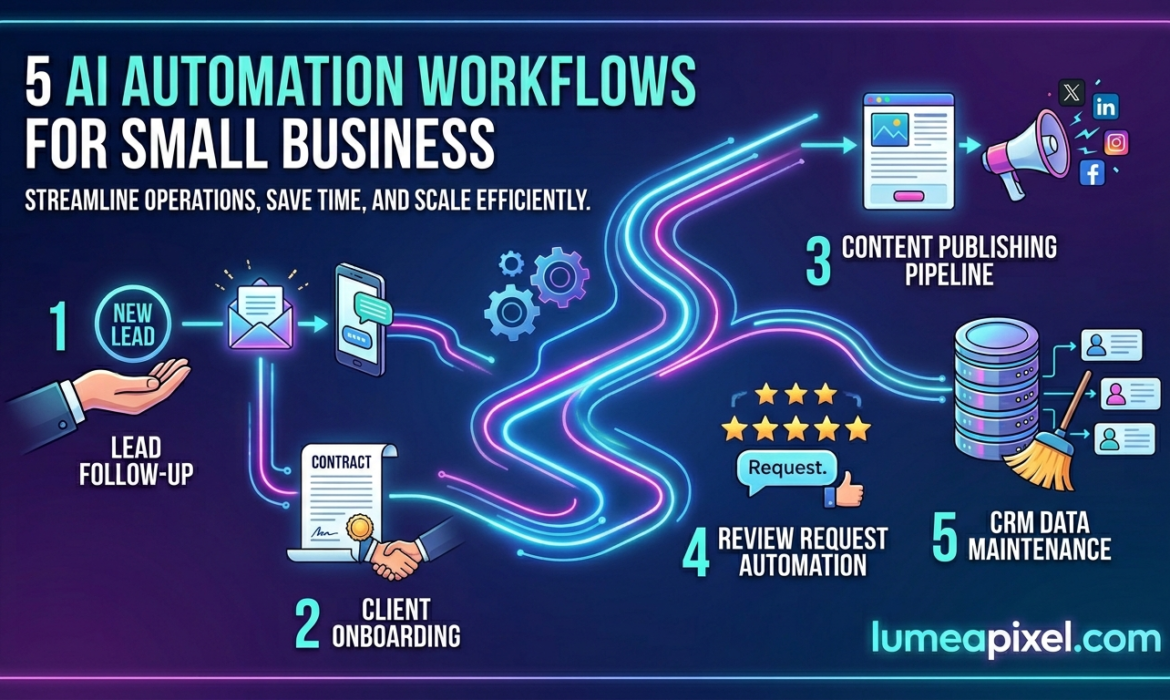
If you are still handling tasks manually that a well-built workflow could be doing for you, you are leaving real time and money on the table. AI automation has moved well beyond basic chatbots and email templates. Today, small businesses can deploy intelligent workflows that handle lead follow-up, content publishing, client onboarding, and more without anyone on your team lifting a finger.
The best part? You do not need a technical background to benefit. You just need to know which workflows are worth building first. Here are five that consistently make the biggest difference.
1. Lead Follow-Up Automation
The biggest mistake small businesses make is letting fresh leads go cold. Someone fills out your contact form or responds to an ad, and then three days pass because your team is busy. By the time you reach out, they have already moved on.
A lead follow-up automation fixes this entirely. The moment a new lead comes in, the workflow automatically sends a personalized welcome email, creates a task in your CRM, and can trigger a text message within minutes of them reaching out. You stay top of mind every single time.
2. Client Onboarding Workflow
Getting a new client is exciting. Onboarding them manually is not. Between sending contracts, collecting intake information, and scheduling kickoff calls, onboarding can eat up several hours per client.
An automated onboarding workflow handles the entire sequence. Once a contract is signed, the workflow triggers a welcome email, sends an intake form, delivers a meeting scheduling link, and provides a clear overview of next steps. Your client feels taken care of, and your team spends zero time managing the handoff.
3. Content Publishing Pipeline
Consistent content is one of the most powerful things a small business can do for its online visibility. But most business owners struggle to maintain it because content requires planning, writing, formatting, and publishing across platforms, which takes far more time than most people have.
A content automation pipeline takes a finished draft, formats it, pulls in relevant images, publishes it to your WordPress site, and shares it across your connected social channels in a single automated sequence. Once the workflow is built, all you need to do is write. Everything else runs on its own.
4. Review Request Automation
Online reviews are one of the most important factors in local SEO and purchasing decisions. Yet most businesses never ask for them consistently, which means they are missing out on social proof that converts.
An automated review request workflow sends a follow-up message to every customer after a service is delivered, inviting them to share their experience on Google or another relevant platform. A friendly, well-timed message dramatically increases the number of reviews you collect with zero ongoing manual effort.
5. CRM Data Maintenance Workflow
Most business CRMs are full of outdated contacts, duplicate records, and missing information. A cluttered CRM leads to poor targeting, missed follow-ups, and wasted time on leads that have already moved on.
A CRM maintenance workflow automatically tags contacts based on behavior, updates deal stages when conditions are met, flags stale leads for review, and removes duplicates on a regular schedule. It is the kind of task nobody has time to do manually but that makes a measurable difference in your sales efficiency.
Automation is not about replacing people. It is about letting your team focus on the work that genuinely requires a human, while the repetitive, time-consuming tasks run in the background. If even one of these workflows sounds like something your business needs, it is worth a conversation.

